
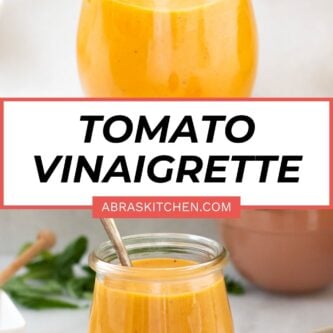
Sweet, golden Sungold tomatoes blend into a silky, flavor-packed vinaigrette that instantly elevates salads, grain bowls, and roasted vegetables. This easy homemade tomato vinaigrette comes together in minutes and delivers the perfect balance of sweet, acidic, and savory in every bite.
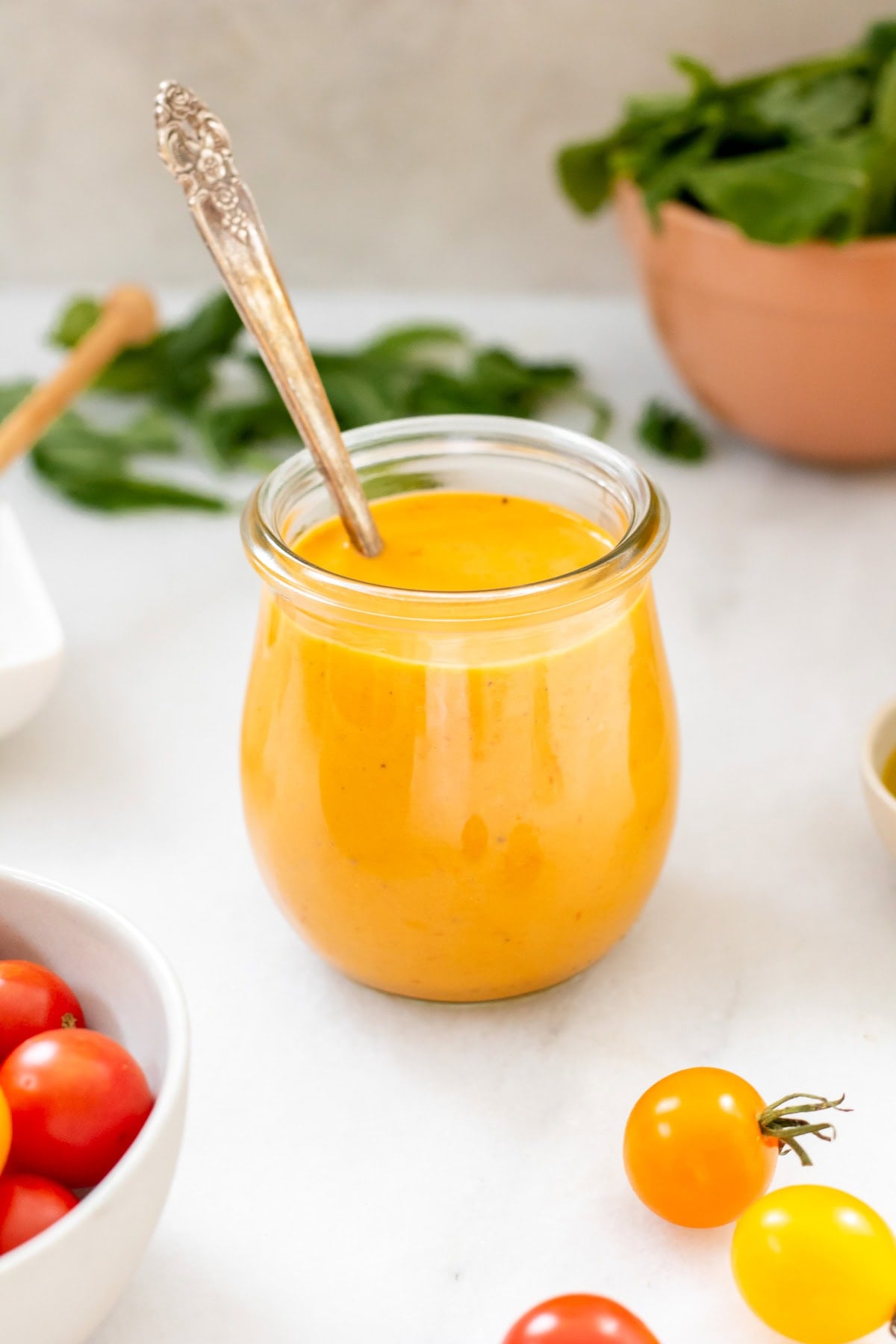
Homemade salad dressing is kind of my thing, you should also try this turmeric tahini dressing and this pumpkin garlic vinaigrette.
Why You’ll Love This Vinaigrette
This is one of those dressings that makes you want to eat more vegetables—not because you should, but because it tastes that good. It’s bright, naturally creamy (thanks to the tomatoes), and has that perfect salty-acidic punch that every good salad demands.
And yes—this will absolutely be on repeat all summer long.
Let’s Get Blending!
Ingredients and Helpful Substitution Tips
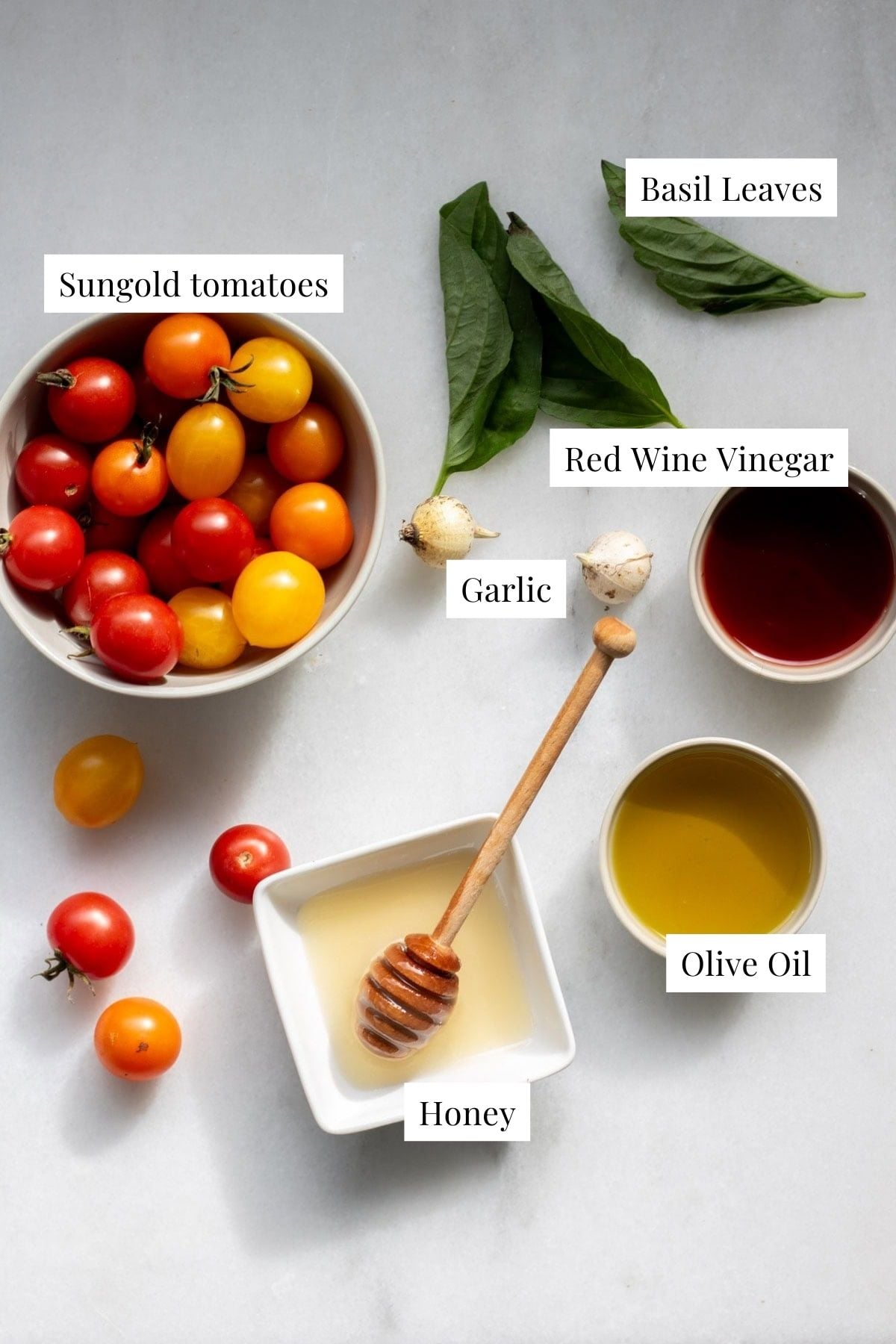
Detailed measurements and ingredients can be found within the recipe card at the end of this post.
- Sungold tomatoes – The star. Sweet, jammy, and deeply flavorful. This is what gives the vinaigrette its signature golden color and natural body. (Cherry tomatoes work in a pinch, but you’ll miss that signature sweetness.)
- Extra virgin olive oil – Your base. Choose a good-quality extra virgin olive oil—this is where richness, body, and flavor come from. A fresh, peppery oil will give the vinaigrette more depth and that subtle “bite” on the finish.
- Red wine vinegar – Brings the acid and balance. You could swap with white wine vinegar or white balsamic for a sweeter dressing.
- Fresh basil – Adds that fresh, aromatic lift that makes everything taste like it came from a garden.
- Garlic – Just a touch for depth and bite.
- Honey – Enhances the natural sweetness of the tomatoes and rounds everything out.
- Salt + black pepper – Always. Always. Always. This is what brings the whole thing to life.
Tools
- Mini blender – currently obsessed with this blender I use it daily in my kitchen!
👩🍳 Abra’s Nutrition/Culinary Tip – Use Good Olive Oil!
Great vinaigrette starts with great olive oil. Since this dressing is simple and blended raw, the flavor of the oil really comes through—so this is where you use the good stuff.
If you know me, you know I split my time between New York and Tuscany, Italy—my love for olive oil runs deep, but my appreciation for it has grown exponentially since planting part-time roots there.
Look for extra virgin olive oil on the label—this means the oil is made from pure, mechanically pressed olives (no heat or chemical processing), preserving its flavor, aroma, and nutritional integrity. Ideally, you’ll also see first cold-pressed, which means the oil was extracted during the first pressing of the olives without heat—resulting in a more vibrant, complex oil.
High-quality olive oil does cost more—and there’s a reason for that. I reserve my best bottles for salad dressings and finishing dishes where the flavor really shines.
You’ll often find premium olive oil in dark glass bottles or tins—this protects the oil from light and oxidation, which can degrade both flavor and nutritional quality over time. Light, heat, and air are the enemies here.
Choose an oil that tastes fresh, a little grassy or peppery, with a pleasant bite at the back of your throat—that’s a sign of those beautiful antioxidant compounds at work.
Step by Step:
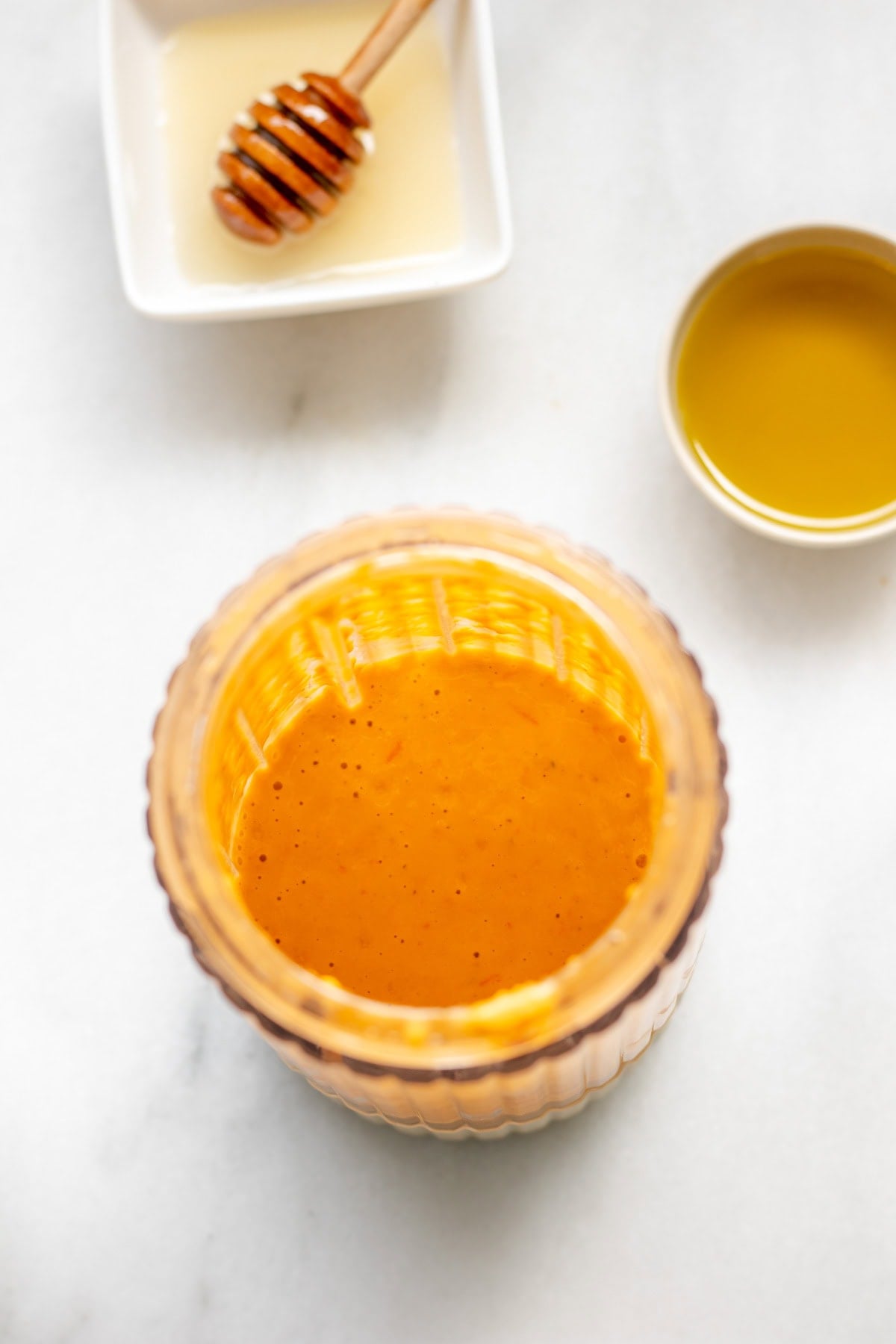
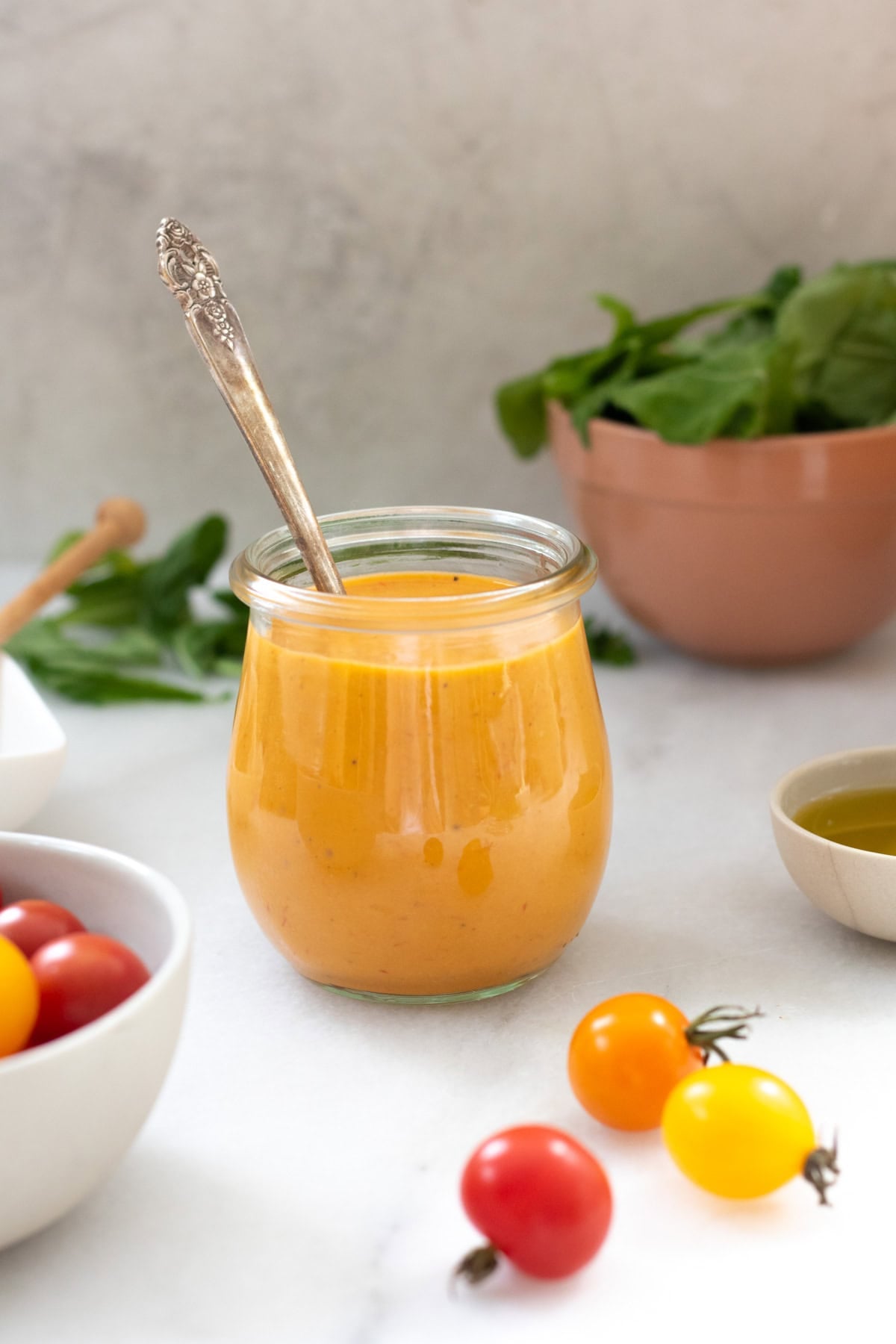
Add everything to a high-speed blender or food processor and blend until completely smooth and creamy, about 20–30 seconds.
Taste and adjust—this is where the magic happens. A pinch more salt, an extra splash of vinegar… trust your palate.
Use immediately or store in the fridge for up to 4 days. Shake or stir before serving.
How to Master Homemade Vinaigrette
A great vinaigrette isn’t a strict recipe—it’s a rhythm you learn in your kitchen. At its core, you’re balancing fat (olive oil), acid (vinegar), and salt—everything else is just building flavor from there.
This version leans on blended tomatoes for body, which is why a blender is key here—but the principle stays the same: taste as you go and adjust until it pops. If it falls flat, it almost always needs more salt or acid.
If you want to really dial this in, I walk through my go-to formulas and techniques in my post on Mastering Homemade Salad Dressings, it’s one of the most useful skills you can build in the kitchen.
A Few Quick Notes
- Too thick? Blend in 1–2 teaspoons of water to loosen.
- No Sungolds? Cherry tomatoes will work, just slightly less sweet.
- Use it on everything: tomato salads, grilled vegetables, roasted chicken, fresh mozzarella, or grain bowls.
Storage Tips:
- STORAGE – Store in a jar in the fridge for 5+ days
More tasty recipes:
- San Marzano Tomato Sauce
- Tuscan Sungold Tomato Pasta
- Pumpkin Garlic Vinaigrette
- Caper Vinaigrette
- Cilantro Jalapeño Dressing
- Homemade Salad Dressings
- Avocado Crema
For more tasty dishes like this one, check out my healthy Mediterranean recipes roundup!
If you’ve tried this recipe, don’t forget to rate and comment!
🌟🌟🌟🌟🌟

Sungold Tomato Vinaigrette
Equipment
Ingredients
- 1 cup Sungold tomatoes
- ¼ cup olive oil
- 2 tsp red wine vinegar
- 3 fresh basil leaves torn
- 1 small garlic clove
- 1 tsp honey
- 1 generous pinch kosher salt
- ¼ tsp ground black pepper
Instructions
- Add the Sungold tomatoes, olive oil, red wine vinegar, basil, garlic, honey, salt, and black pepper to a high-speed blender.1 cup Sungold tomatoes, ¼ cup olive oil, 2 tsp red wine vinegar, 3 fresh basil leaves, 1 small garlic clove, 1 tsp honey, 1 generous pinch kosher salt, ¼ tsp ground black pepper
- Blend until completely smooth and creamy, about 20–30 seconds.
- Taste and adjust seasoning, adding additional salt or vinegar if desired.
- Use immediately or store in an airtight container in the refrigerator for up to 6 days. Shake or stir before serving.
Notes
- No Sungold tomatoes? Substitute cherry tomatoes, though Sungolds provide a sweeter flavor and vibrant color.
- If the vinaigrette is thicker than you’d like, blend in 1–2 teaspoons of water to thin.
- Delicious over tomato salads, grilled vegetables, roasted chicken, or fresh mozzarella.
Nutrition
FAQ:
For this recipe, yes. The tomatoes need to fully break down to create that smooth, naturally creamy texture. A high-speed blender or food processor will give you the best result.
Stored in an airtight container (I like to use weck jars or mason jars) in the refrigerator, it will keep for up to 6 days. Give it a good shake or stir before using, as natural separation may occur.
Everything. But especially tomato salads, grilled vegetables, grain salads, pasta salads, roasted chicken, fresh mozzarella, or drizzled over a simple arugula salad. It also works beautifully as a finishing sauce for grain bowls.

















Share Your Thoughts